Raven S508 is a multichannel high-speed signal acquisition and storage system. It integrates RF acquisition, host processing and local recording in one chassis for IQ recording, offline analysis and system integration.
New product. This page describes system components and responsibilities. Available profiles, time synchronization, sustained recording and RF specifications depend on the delivered configuration and its test scope. Board resources, nominal link rates and short captures are not complete-system performance guarantees.
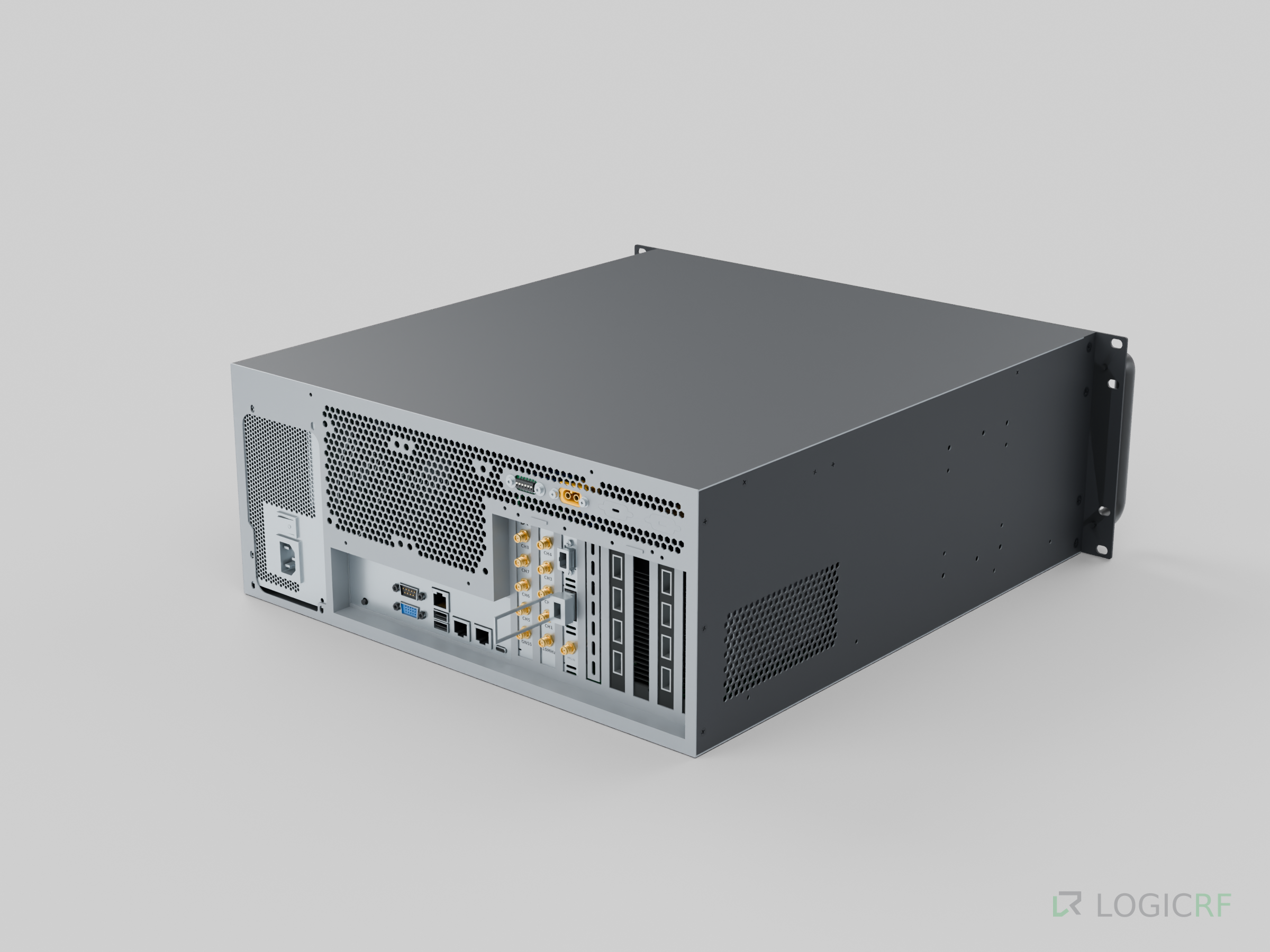
¶ System components
| Component | Purpose |
|---|---|
| Eight-channel acquisition unit | RF sampling, digital processing and packet formation |
| High-speed transport | 100GbE connection between the acquisition unit and receiving host |
| Receiving host | Device SDK, DAQ and application services for reception, tasks and files |
| Recording storage | Valid acquisition payloads, segments and task metadata; capacity follows the configuration |
| Reference and timing | Frequency reference, PPS and GNSS time information as configured |
| Enclosure and cooling | Interface, cable and component retention, power distribution and active cooling |
RF front ends, cables, storage capacity and compute resources are configuration choices. The frequency range, gain or calibration of one optional front end does not define every S508 system.
¶ Data and control
Sample data travels directly from the acquisition unit to the host receiving path. ULMUS manages device configuration and lifecycle, Device SDK supplies control and reception interfaces, and DAQ manages tasks, storage and metadata. Configure management and high-speed links separately. A reachable management page does not establish a working data path.
ADC sampling rate, decimated IQ output rate, useful signal bandwidth and disk write rate are different quantities. Check the channel set, format, IQ rate, flow count and storage budget together.
¶ Reading and selection
Start with interfaces and integration, then verify the hardware revision, acquisition software, SDK/DAQ, network and storage against the delivery manifest. S508 software has its own product identity and matched set. Do not apply R508 packages, defaults or four-App switching procedures without an S508 delivery instruction.
Begin with a permitted low-rate short task. Check reception, valid saved data, metadata and normal stop before increasing rate or duration. For timestamps, verify the time-source state, second-edge association and sample continuity separately.
¶ Documentation and delivery
Provide your RF range, channel count, IQ rate, recording duration, timing and external-interface requirements to support to confirm the system configuration and delivery documentation. LogicRF GitHub is the entry for code and teaching examples; specific repositories and account permissions follow the delivery arrangement.